
Go Games sliotars compared: First Touch vs Quick Touch vs Smart Touch
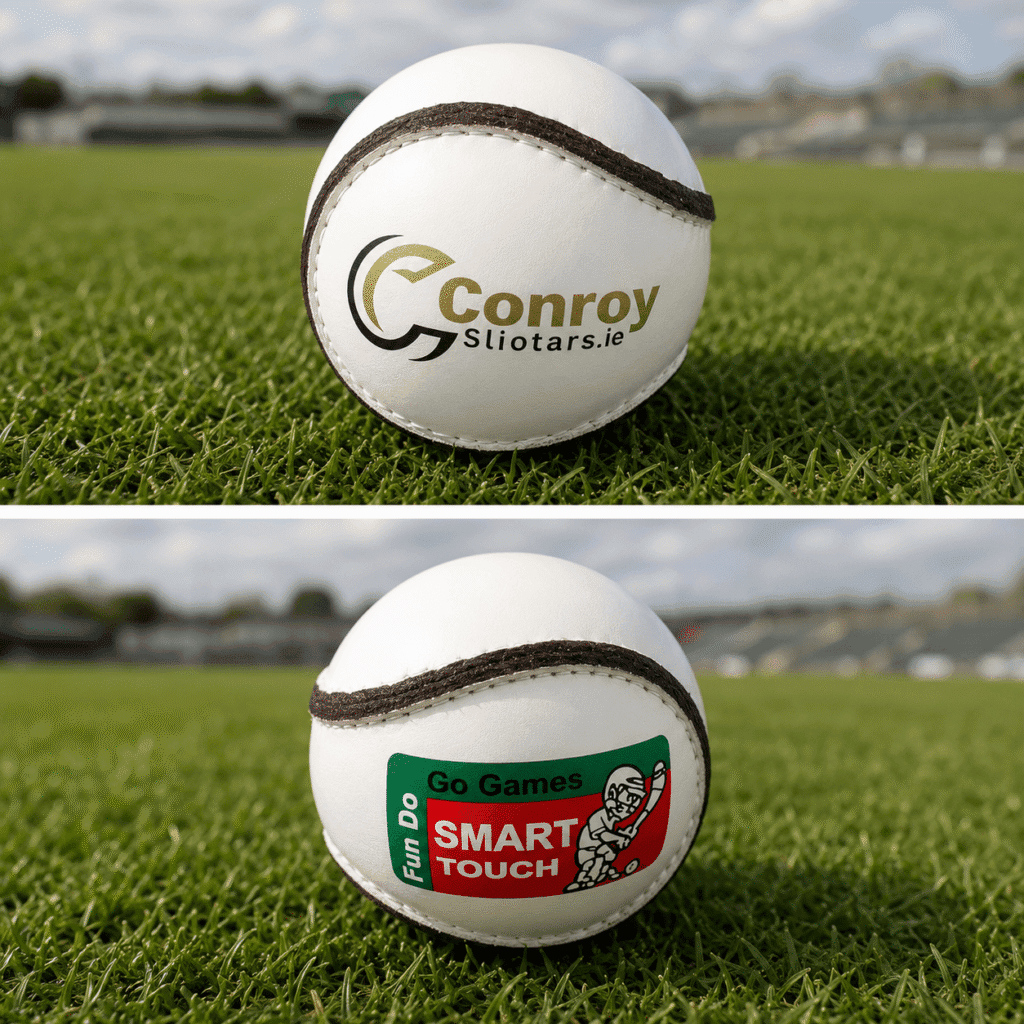
Every juvenile coach meets the same question at the start of the season: which Go Games ball does this group need? The range exists for a good reason — a leather sliotar is too hard and heavy to learn on — but the three names confuse people. Here is the ladder, in order.
First Touch — the starting ball
The First Touch is the softest and lightest ball we sell. It is for the very youngest players: children learning to catch without flinching, lift without looking, and swing without fear of the ball. If the group is brand new to hurling or camogie, start here — confidence first, everything else after.
Quick Touch — striking starts to matter
The Quick Touch is a step firmer, aimed at roughly U8–U10. It still protects small hands, but it behaves more like a sliotar off the hurl — enough weight to teach a real ground strike and a proper first touch. Most Go Games matches at this age run on a Quick Touch.
Smart Touch — the last stop before leather
The Smart Touch is built for U11–U12 and it is nearly the real thing: genuine feel off the hurl, honest rebound, close to match weight. Players who spend a season on a Smart Touch step onto a leather size 4 without the shock that puts kids off the game.
When to move up
Watch the group, not the birth certs. Move up a ball when the current one looks easy: clean overhead catches, confident strikes, nobody turning their head away. If half the group is struggling, stay put another few months — rushing the ladder costs more than it saves.
Buying for a club or school
All three balls come in dozen packs up to five dozen, so every child trains with a ball each. Clubs usually order a mix across their age groups in one go — see club & school orders or read our full sliotar sizes guide for the leather sizes that come next.